

👉 What does your teen believe about themselves right now?
Because before we talk about grades, motivation, or missing assignments, we have to start there.
I’ve sat on ZOOM with so many teens who look confident on the outside (people pleasers and perfectionists) —but the story playing in their head sounds very different:
- “I’m bad at school.”
- “I always mess things up.”
- “Why even try if I’m just going to fail again?”
And when a teen believes those things, confidence doesn’t disappear overnight.
It erodes quietly, day by day.
And I know for some of you, reading this may bring tears to your eyes as you think about the way your teen talks to themselves — the quiet, often unseen story they’re telling about who they are.
That realization can be deeply heartbreaking for us as parents, because we love them so fiercely and wish they could see themselves the way we do. 💛

The Weight of School Shame on a Teen’s Confidence
School shame is one of the most common confidence blockers I see—especially in teens with ADHD.
It builds when:
- Assignments pile up faster than they can manage
- They’re compared to peers who look like school comes easier
- They hear more corrections than encouragement
- Effort doesn’t match results
- Workload is overwhelming leading to procrastination with little productivity.
Over time, many teens stop seeing school struggles as something they’re experiencing…
and start seeing them as something they are.
That’s when self-talk shifts from:
“This is hard”
to
“I’m a failure.”
And shame thrives in silence. Yes, it’s heartbreaking.
If your teen avoids school conversations, shuts down quickly, or reacts defensively—it’s often not defiance. It’s protection.

What Confidence Actually Is (and Isn’t)
Confidence is not:
- Straight A’s
- Loving school
- Being motivated all the time
Confidence is:
- Believing you’re capable of learning
- Trusting that mistakes don’t define you
- Knowing one bad moment ( or missing assignment, or grade) doesn’t erase your worth
For teens with ADHD, confidence grows after safety—not before success.
They need to feel:
- Seen beyond grades
- Valued beyond performance
- Believed in before they believe in themselves
If you feel your teen would benefit by reading this blog, I would encourage you to text the link to them.
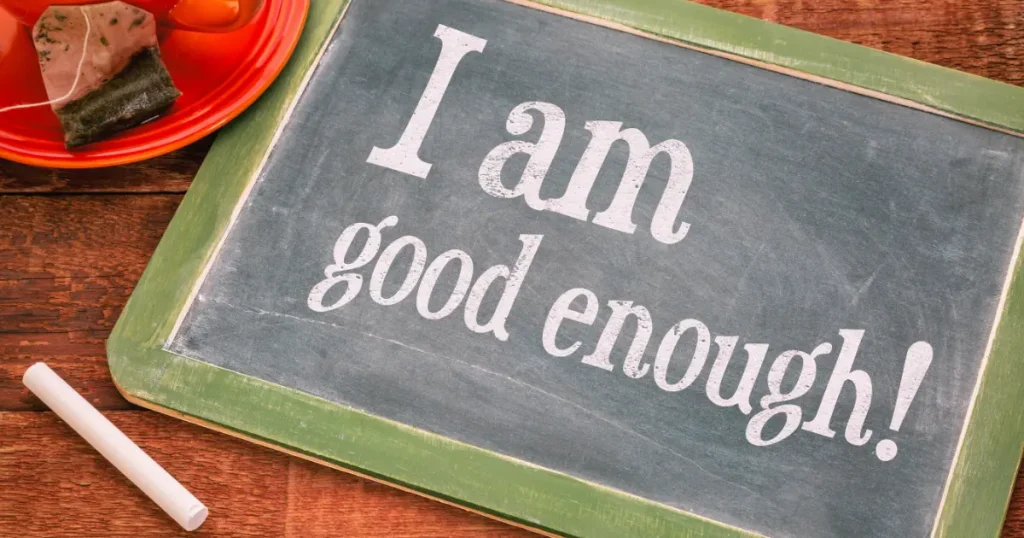
The Power of Strength-Based Language
One of the fastest ways to rebuild confidence is by changing how we talk about struggles.
Instead of focusing on what’s missing or not working, we anchor to strengths—even while addressing challenges.
Here are a few small shifts that matter more than they seem:
❌ “You’re so unmotivated.”
✅ “Getting started is really hard for your brain—and we’re figuring out tools.”
❌ “You just don’t care.”
✅ “I can see how overwhelmed you are.”
❌ “Why can’t you do this like everyone else?”
✅ “Your brain works differently—and that means we need different strategies.”
This isn’t lowering expectations.
It’s removing shame so growth is possible.
Teens internalize the language they hear most. Make sure it’s not quietly reinforcing the belief that they’re broken (they are not.)
Rebuilding Confidence: One Day at a Time
Confidence isn’t rebuilt with one pep talk.
It’s rebuilt through tiny, repeatable wins.

Here’s what that looks like in real life:
1. Shrink the definition of success
Instead of “finish everything,” try:
- “Start for 5 minutes”
- “Complete one problem”
- Reduce the pile
- “Email the teacher, not solve the whole issue”
Progress builds belief.
2. Reflect effort, not outcome
Say things like:
- “You stuck with that longer than yesterday.”
- “I noticed you didn’t give up right away.”
- “That took courage.”
Even when the result isn’t perfect, effort still counts.

3. Separate identity from performance
Remind your teen—often:
- Grades are feedback, not a verdict
- Struggles are information, not character flaws
- Failing at something ≠ being a failure
They need to hear this from you before they can hear it from themselves.
4. Ask questions that build awareness
Instead of fixing or lecturing, try:
- “What felt hardest today?”
- “What helped even a little?”
- “What would ‘progress’ look like right now?” (btw, “progress” is my word of the year 😉.)
These questions invite reflection instead of defensiveness—and help teens reconnect with their own agency.

So, coming back to this….
Take a moment and ask yourself: what does your teen truly believe about themselves?
If the words that come to mind sound like lazy, not smart enough, broken, behind, or never good enough — that’s not a failure on your part. That’s simply information. And it tells us exactly where the work begins.
Because confidence doesn’t grow under pressure or constant pushing.
It grows when a teen feels believed in, emotionally safe, and supported — again and again, over time.
And parent to parent, I want you to hear this clearly:
You are not parenting this wrong.
Your teen is not beyond help.
This hard season is not the story of their future.
Confidence can be rebuilt.
Quietly. Gently.
One small, meaningful win at a time. 💛