
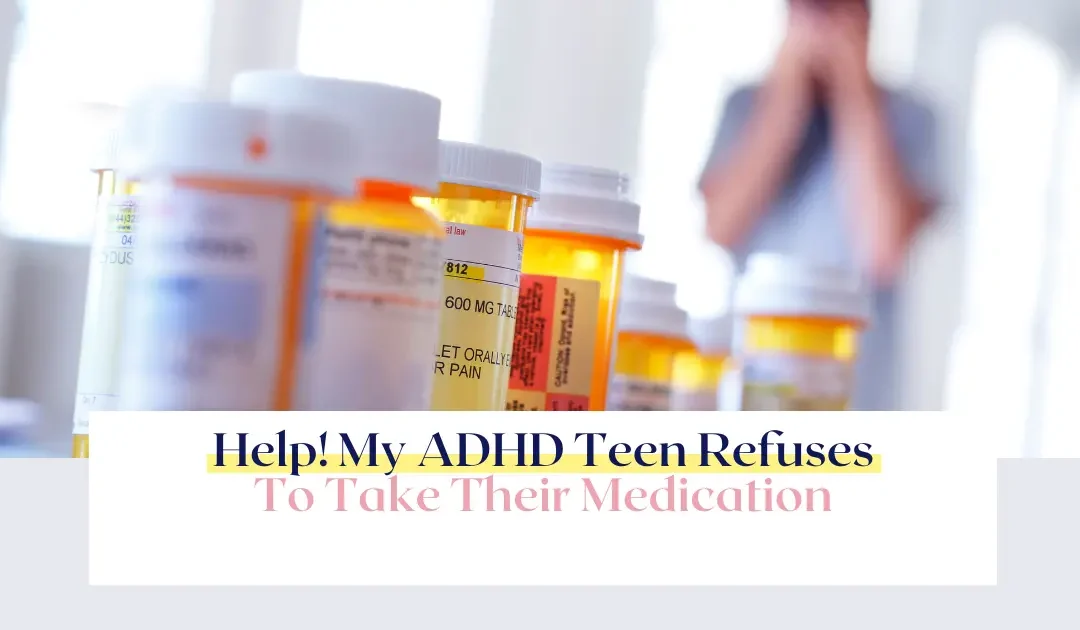
🎯 ADHD Medication Isn’t Just About Focus — It’s a Life Skill for Independence
Let’s talk about one of the biggest challenges many families face with their ADHD teen…
👉🏻 They don’t want to take their meds.
It might be the eye roll, the “I forgot,” the flat-out refusal, or the classic: “I feel fine today, so I don’t think I need it.”
Sound familiar?
If your teen is resisting their ADHD medication—even though they’ve experienced how much better they can function with it—you’re not alone. This is so common in my world of teen coaching. And the truth is, it’s not about laziness or defiance. It’s about control, self-awareness, and the long (and sometimes messy) path to independence.
Let’s unpack this together.

💊 Medication: The #1 Life Skill for Independence?
Yep. I said it.
Consistently managing ADHD medication is one of the most important life skills your teen can develop for long-term independence.
Here’s why:
- It builds self-awareness. Teens begin to notice, “I do better when I take it,” and “I struggle more without it.” That connection is powerful.
- It teaches responsibility. Taking a daily medication—even when it’s annoying—is about showing up for yourself. That’s real life.
- It supports executive function. Medication doesn’t give your teen skills, but it creates the brain space for them to learn and use them.
- It improves quality of life. When meds are taken consistently, school feels less overwhelming, moods are more stable, and relationships improve.
But here’s the kicker: this only works if the meds are taken consistently. ADHD meds aren’t like Tylenol—taking them “as needed” doesn’t build skill, structure, or routine. It builds inconsistency and more frustration.
⚠️ Why Teens Resist (Even When It’s Working)
So if they know the meds help… why don’t they want to take them?
Here’s what I hear in my sessions:
- “I hate how it makes me feel—not hungry, not myself.”
- “It’s annoying to have to take something every day.”
- “I feel like I’m only OK because of a pill. That doesn’t feel good.”
- “I just forget.”
Totally valid.
And also totally workable.
This is where coaching and open conversation come in. Your teen doesn’t need lectures. They need support in:
- Understanding the “why” behind consistent use
- Tracking how their day goes with and without meds
- Having a voice in the process, especially when managing side effects

✅ What You Can Do as a Parent
Here are a few coaching tips I give families all the time:
- Normalize it: Talk about meds like any other tool.
“This isn’t about fixing you—it’s about supporting you.”
“ If you had a heart condition, you would take the meds for it.”
“ Life is about using the best tools to help you stay healthy and be on task.”
- Let them track the data.
Use a simple mood and focus tracker for two weeks with and without medication. Let the results speak for themselves. - Acknowledge side effects.
Don’t dismiss them. Collaborate with your doctor to troubleshoot. Teens need to feel heard. - Make it routine, not optional.
Connect it to something they already do (like brushing teeth). Tie it to independence: “This is part of taking care of yourself.” - Praise the effort, not the perfection.
“I know you don’t love this, but I’m proud you’re taking steps to show up for yourself.”

🌱 The Bigger Picture
Taking ADHD medication isn’t a “you have to do this because I said so” issue—it’s a personal development skill. A step toward independence. A brain-based support that empowers your teen to do the things they want to do more easily and with less frustration.
Some teens need time. Some need reminders. Some need their doctor to tweak things until it feels right.
But all teens need compassion and clarity.
✨ If your teen is struggling to stay consistent with their medication—or you’re unsure how to support them through this conversation—know that you’re not alone. This is exactly the kind of work I do with families every day.
Want more support? Check out my coaching program or join my Parent Membership where we unpack these big topics together—one step at a time.