
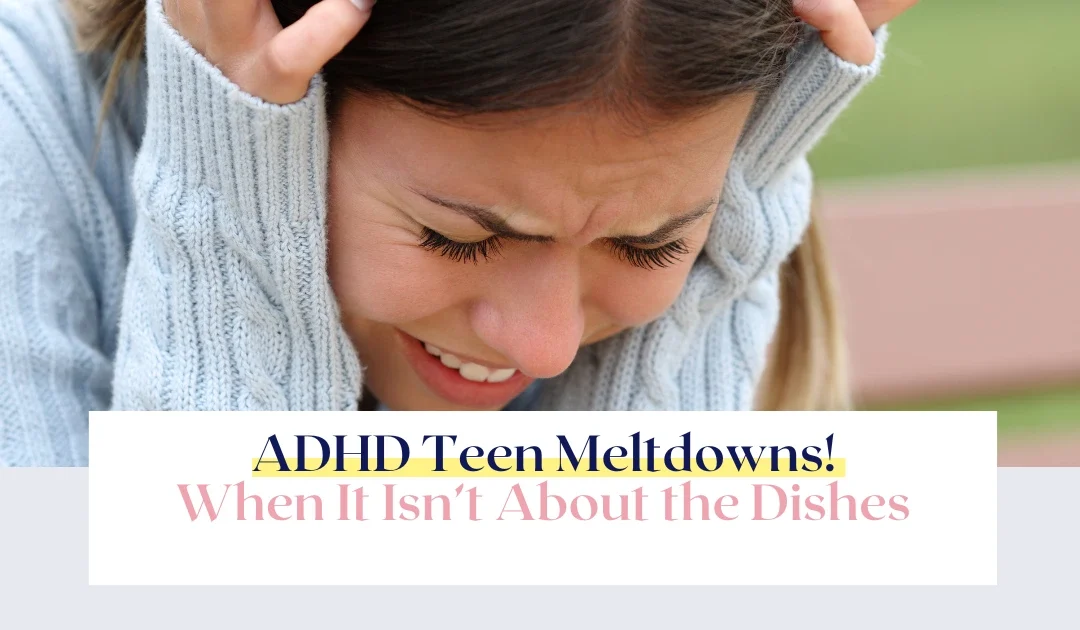
You know those moments. Not sure who is coming down the stairs or walking in the door. Excited to see your teen after they’ve been in school all day or knowing you’ve made them their favorite dish for supper. They walk in the door and unload. Or they come into the kitchen and even their favorite meal isn’t enough to regulate their feelings.
Ever found yourself staring at your teen in disbelief when these citations happen? Wondering how a simple, “I’m so happy to see you, how was your day, honey?” turns into a full-blown emotional meltdown?
You’re not alone.
In homes with ADHD teens, emotional intensity often shows up suddenly and over what seems—on the surface—like “no big deal.” But here’s the truth I’ve learned after coaching hundreds of families: It’s never just about the trash. Or the kind greeting. Or the socks on the floor. Or the homework left undone. Those are the tip of the iceberg.
Let’s unpack what’s really going on—and what both parents and teens can do when emotions start to run the show.

What’s Really Behind the Meltdown?
Before we dive into the “how to handle it,” let’s first understand the why. Emotional dysregulation is a hallmark challenge for ADHD brains and is one of the hardest co-existing behaviors to manage. It means emotions come on strong, fast, and often feel overwhelming—sometimes even for the teen themselves.
Here are a few sneaky culprits behind those explosive moments:
1. Sensory Overload
The lights are too bright. The TV is too loud. The chair squeaks every time they move. While your teen may not articulate these things, their nervous system is already on edge. Add in a request or critique? Boom 💥—they explode.
2. Lack of Sleep
Teens need 8–10 hours of sleep, and many aren’t getting even close. A sleep-deprived ADHD brain is like trying to run your phone on 2% battery…with 8 apps open. Small tasks feel enormous.
3. Feeling Misunderstood
ADHD teens often internalize the message that they’re “too much,” “too emotional,” or “not trying hard enough.” So even a simple reminder can feel like another jab. That defensiveness? It’s self-protection.
4. Emotional Overflow
Sometimes your teen has been “holding it together” all day at school or with friends. Home becomes the one place they feel safe enough to release all the bottled-up frustration, confusion, anxiety, or shame.
5. Hormones
Let’s not forget puberty and hormones. In the teen years, hormonal shifts are already creating emotional highs and lows. When you mix that with ADHD (which already lowers emotional regulation thresholds), the result can be a perfect storm. What seems like “overreacting” might actually be their nervous system + hormones in overdrive.

Coping Strategies for Parents: From Chaos to Calm
Let’s start with you, because your response sets the tone for what happens next and…let’s be honest… it’s important to model the behavior we desire in our teens. (not always easy!)
💬 1. Pause, Don’t Pounce
It’s tempting to correct, lecture, or demand mid-meltdown—but that only escalates things. Instead, take a deep breath (or three), lower your voice, and create a moment of calm. Your regulation helps their regulation. It is important for our teens to know how to de-escalate their emotions.
Try saying:
“I can see you’re really upset. Let’s take a few minutes and come back to this when we’re both calmer.”
🛑 2. Resist the Urge to Fix
Your teen isn’t always looking for answers—they’re looking to feel seen. Validate the emotion first, then problem-solve later. Sometimes saying less is more, as in the example below. You don’t have to solve or fix anything- that’s not your responsibility!
Try saying:
“That sounds really hard. I’m sorry you’re carrying so much right now.”
🧭 3. Use the “Window of Calm” Later
Once the storm passes, that’s your moment. This is when executive function kicks back in and your teen can reflect. Keep it short, nonjudgmental, and curious.
Try asking:
“Earlier felt tough—can we talk about what might’ve been going on underneath?”

Coping Strategies for Teens: Learning to Ride the Wave
Teens with ADHD often feel like passengers to their own emotional outbursts. But with support, they can build emotional tools that help them steer the ship instead.
⏸️ 1. Recognize the Build-Up: know the triggers
Teach your teen to spot the signs before the explosion—clenched fists, fast heartbeat, wanting to yell or shut down. Awareness is the first step to self-regulation.
Try this tool:
Use a simple “meltdown meter” from 1–5 to help name what level they’re at before it hits a 5.
🧊 2. Cool-Off Routines
Help your teen identify ways to calm their nervous system. This might be stepping outside, squeezing a stress ball, taking a cold drink of water, or laying under a weighted blanket.
📓 3. Name It to Tame It
Journaling, voice notes, or even drawing can help teens externalize what they’re feeling. The act of naming emotions helps reduce their intensity.

💛 A Final Word for the Exhausted Parent
I know it’s hard.
Watching your teen spiral over something seemingly small is disorienting and often heartbreaking. But behind every meltdown is a need—sometimes unmet, sometimes misunderstood. You are not failing. You’re in the trenches with a child who is still learning how to be in their own body and brain.
And every time you choose connection over correction, you’re planting seeds of trust and resilience that will grow.
✨ You don’t have to be perfect. You just have to keep showing up with compassion.

Ready to go deeper?
In my parent membership and coaching programs, we talk through scripts, tools, and mindset shifts that help you turn moments of conflict into opportunities for growth and connection.
💌 If you’re curious about how I can support you and your teen, reply to this blog or head to reach out to me and let’s chat.
You’re not alone. And I’m here to walk with you. ❤️